

Hello from Ailsa and Beccy
This month, we’re looking at how businesses can get ready for what’s next. We ask whether some of the processes we’ve inherited are still worth doing, why developing tomorrow’s skills should start today, and how simply listening to your people can uncover opportunities you may be missing. We also meet ES3 Engineering Operations Manager Curtis Nepia, who shares a career built on backing yourself, embracing change and, above all, looking after the people around you.
Are we starting to turn a corner?

After a long period of fairly gloomy employment news, there are a few numbers starting to move in the right direction.
The latest Stats NZ employment indicators show that New Zealand added 5,391 seasonally adjusted filled jobs in August, an increase of 0.2% in just one month.
Even more interesting for the industries we work with, goods-producing industries added 2,008 jobs during the month, an increase of 0.5%.
Construction has also shown some encouraging movement. Stats NZ’s latest quarterly business employment figures showed construction added 907 filled jobs in the June quarter compared with March, again an increase of 0.5%.
Are we booming? Absolutely not.
Manufacturing employment, for example, fell 0.4% in the June quarter, and Wellington businesses are still operating in a challenging environment.
But after a prolonged period where businesses have been cautious about hiring, it’s worth paying attention when several indicators begin pointing in a more positive direction.
The Reserve Bank has also noted that businesses have been reporting stronger activity over recent months and says the economic recovery appears to have resumed. Importantly for employers and job seekers, it expects that recovery to encourage businesses to hire more people and invest.
We’re hearing some of that ourselves.
The conversations aren’t suddenly about enormous growth plans or hiring dozens of people. They’re smaller signs: an additional person needed here, a project finally getting underway there, or an employer starting to think about the people they might need in the months ahead.
That’s often how a recovery begins.
Nobody should be popping the champagne just yet. There are still plenty of economic headwinds, and the recovery is clearly uneven.
But after the last couple of years, we’ll happily take some green shoots.
And if businesses are beginning to look forward again rather than simply holding the line, that’s good news for employers, workers and Wellington.
Are outdated processes wasting your team’s time?
One thing we regularly do within our own administration team is review the duties and processes that have built up over time. When our administrator is away, Ailsa and I often step into the role ourselves. It’s actually a really useful exercise because, when you’re doing the job firsthand, you sometimes realise that certain tasks are no longer necessary, or that there’s a simpler and more efficient way of doing them.
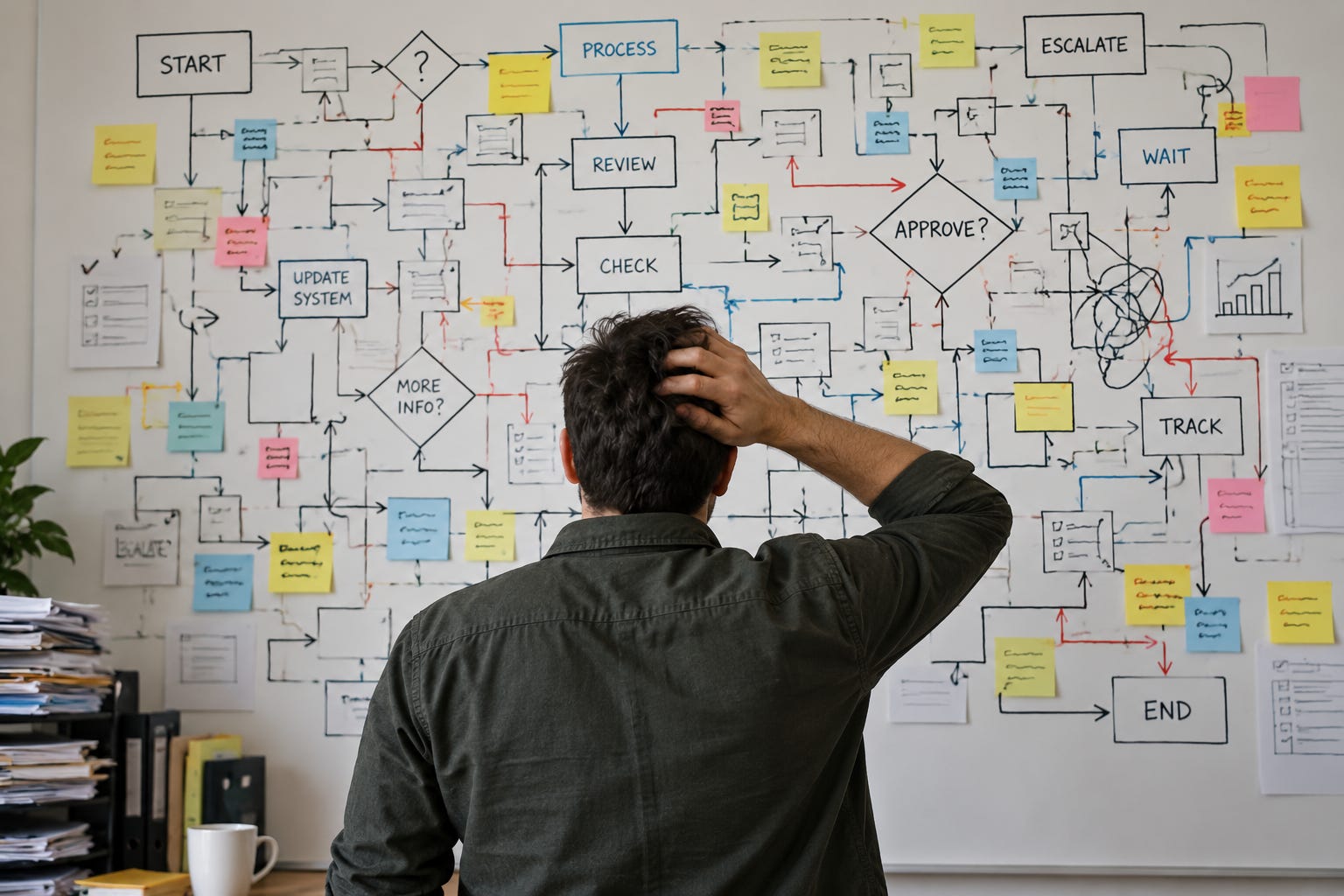
It’s surprising how easily a task can continue simply because “that’s the way we’ve always done it.” A report that was once important may no longer be used. A process that made sense five years ago may now take far more time than it’s worth. Technology may have made a task unnecessary altogether.
And sometimes the person who can see this most clearly is the newest person in the team.
When someone new joins your business, they don’t have years of history telling them why something has always been done a certain way. They may have used a better system in their previous workplace, know a quicker way to complete a task, or simply notice an inefficiency that everyone else has stopped seeing.
Once they’ve had time to settle in and understand the role, ask for their thoughts. Give them the confidence to question the way things are done and, most importantly, be open to their ideas. A fresh perspective can often highlight opportunities for improvement that those of us who have been doing things the same way for years may no longer see.
That’s why it’s important to regularly review your processes and involve the people actually doing the work. Encourage them to question how things are done and to suggest better ways of doing them. New employees in particular can bring a fresh perspective, so make sure you’re giving them an opportunity to share it.
Reviewing a role isn’t just about asking whether someone has too much on their plate. It’s about looking at what they’re actually spending their time on and whether all of it still adds value.
Sometimes improving productivity doesn’t require people to work harder.
It simply requires us to find a better way of doing the work.
What skills will your team need in three years?
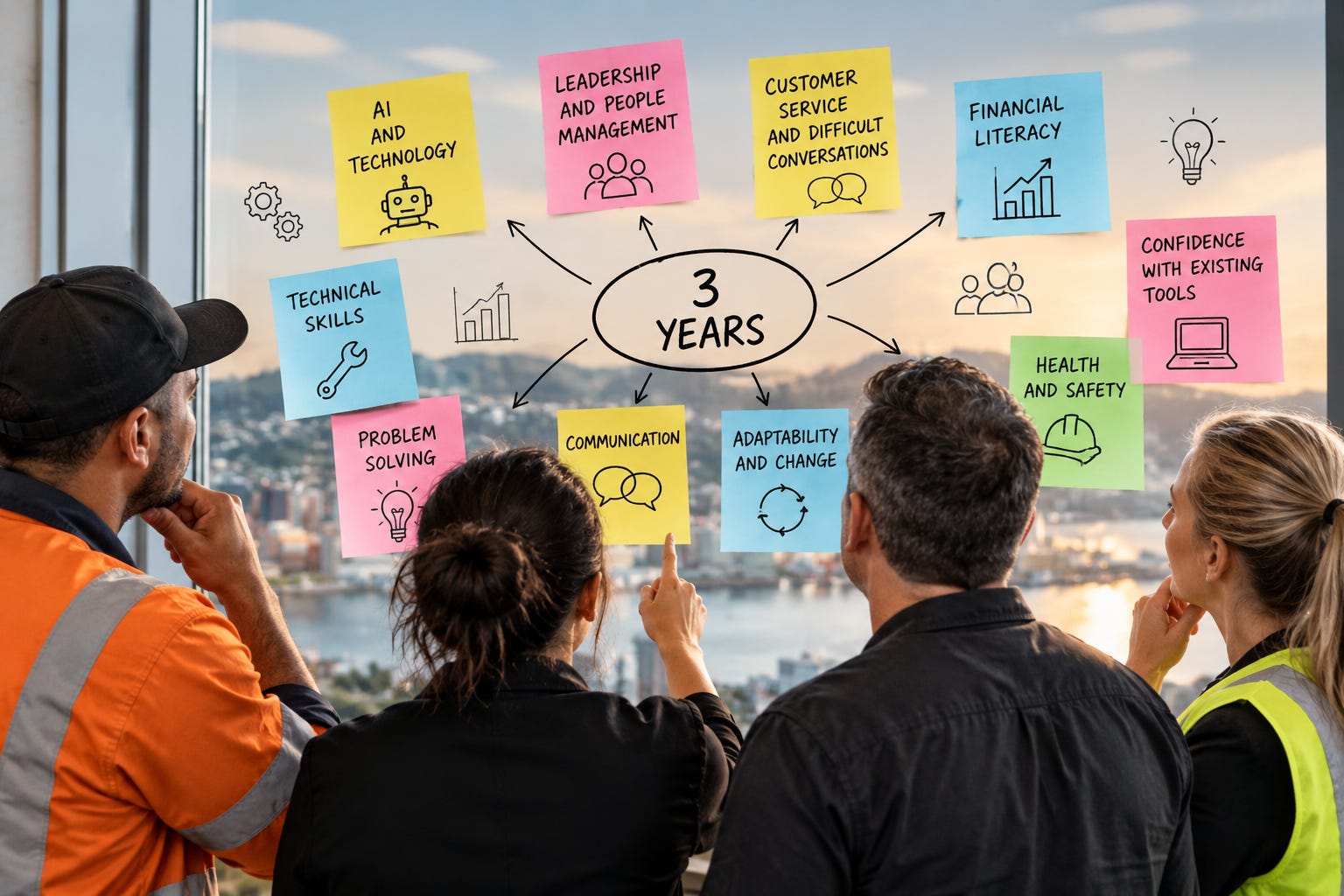
You might think you know where the skills gaps are in your business, but the people doing the job every day may see something completely different.
For example, an employer might think someone needs AI training. The employee might say their biggest challenge is managing difficult customers, understanding financial information, supervising others or becoming more confident using existing technology.
Maybe a simple conversation with each employee could help you understand where they’re at, where they want to go, and what support they might need to get there.
Don’t just train people for the job they’re doing today. Develop them for how their role may change in the years ahead.
Businesses tend to respond to skills gaps once they’ve become a problem. But if you know someone’s role is going to change significantly over the next few years, why wait?
It could also connect nicely to retention.
When you ask someone what they’d like to learn and where they want to be in a few years, you’re not only identifying skills gaps. You’re showing them that you can see a future for them in your business.
You probably have a plan for where you want your business to be in three years but do you have a plan for where your people need to be?
You might be surprised by what you learn simply by asking:
What parts of your job are changing the fastest?
What do you find harder today than you did a few years ago?
What skills would make your job easier?
Is there something you rely on other people to do that you’d like to be able to do yourself?
What would you like to learn next?
Where would you like your career to go?
What could we start teaching you now that you’ll need in the future?
My Job, My Story
Curtis Nepia
Operations Manager- ES3 Engineering
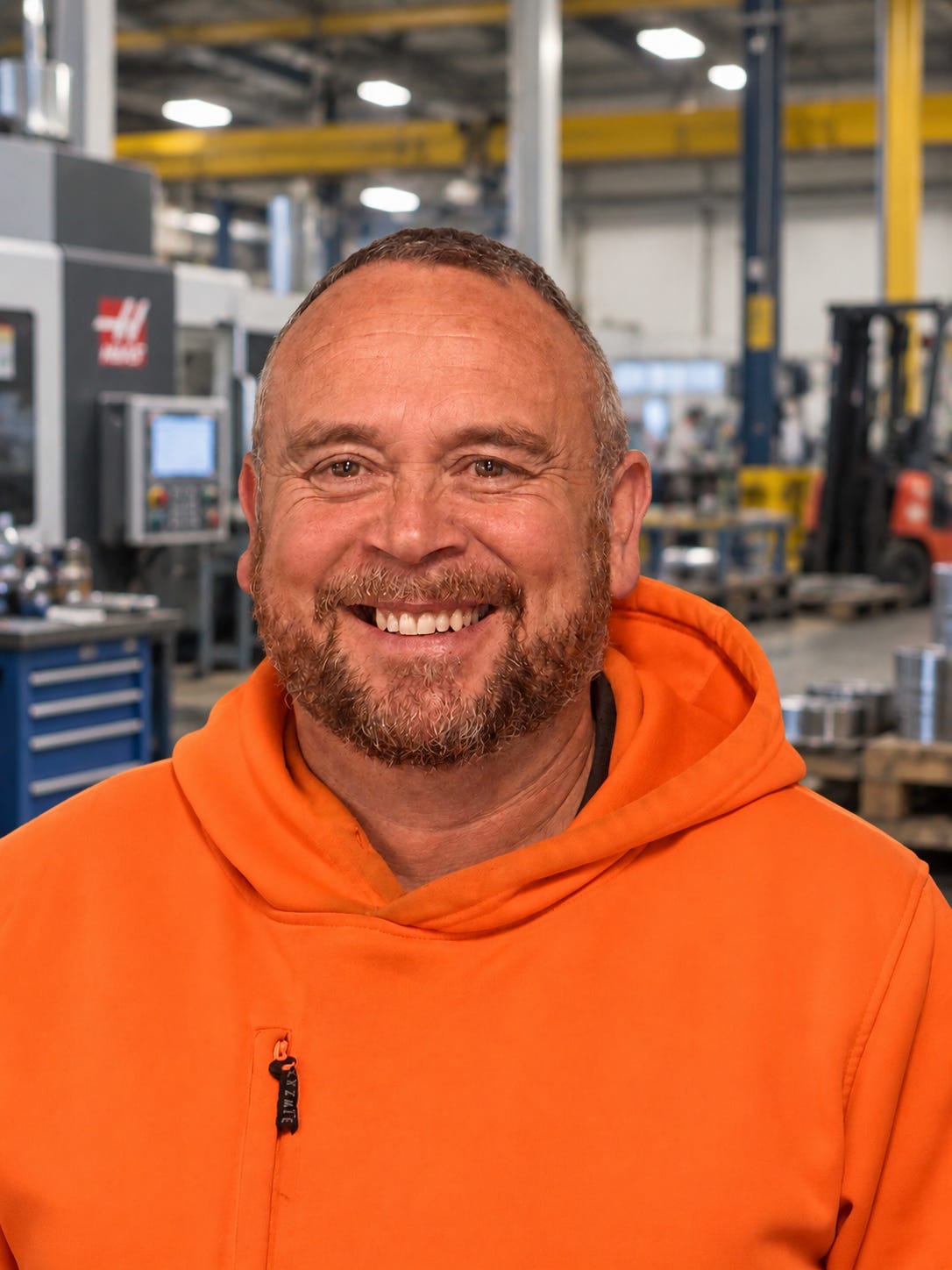
This month we meet Curtis Nepia, whose career has taken him from bricklaying and making wooden doors to more than 20 years in engineering and manufacturing.
Curtis shares what he’s learned about leadership, backing yourself, supporting your team and knowing when it’s time for a change. For Curtis, success isn’t just about climbing the ladder. It’s about enjoying what you do, helping the people around you succeed and being happy at work.
When you were younger, did you know what you wanted to be?
No, I didn’t really have much direction when I was younger. I toyed with the idea of joining the Army and actually got right to the point of getting on the bus to Waiouru, but in the end, I decided not to go.
Then one of my father’s friends threw me a bit of a lifeline and took me on as a bricklaying apprentice. I didn’t finish the apprenticeship, unfortunately. The building industry in the Wairarapa wasn’t that busy back then, so there weren’t enough hours to keep me going.
I’d left school at 16, and from bricklaying I moved into making wooden doors at Reynolds Doors. I was there for a couple of years before technology took over. They brought in a new machine that replaced a lot of the work we were doing, and I was made redundant.
They actually offered me my job back after realising they’d let too many people go, but by then I’d already started at JNL in Masterton. I began there as an operator on a rotary lathe, peeling logs into veneer, and over the five years I was there I worked my way up to section leader.
When I was about 23, I decided to move over to Lower Hutt, and that’s when I started at IML Plastics as a production supervisor.
How did you get to where you are today?
I suppose my engineering career really started when I joined IML. I initially applied for a night-shift supervisor role just to get my foot in the door, and from there the opportunities started opening up for me.
I’d always been interested in engineering. When I was at JNL, I’d tried to get an apprenticeship in their engineering department, but there was nothing available at the time. That was one of the reasons I decided it was time to spread my wings, leave the Wairarapa and move over to Lower Hutt.
After about two years on night shift at IML, I moved onto day shift and started my apprenticeship in maintenance and diagnostics as a fitter-turner. I was a bit older than your typical apprentice, but I managed to complete what was normally a four-year apprenticeship in three years.
My role covered maintenance throughout the factory, but I was also lucky enough to be surrounded by toolmakers who taught me a lot of that side of engineering as well.
As the business got busier, I started helping the engineering manager more and more. I found I really enjoyed that side of the job, and when the manager eventually moved on, I had the opportunity to step up. I became the Injection Moulding Engineering Department Manager and stayed in that role for several years.
I left IML in 2022 and decided to give the corporate world a go. It was a very different environment from what I was used to, and I quickly realised it wasn’t for me. I’d spent most of my career in privately owned businesses where there was more of a family environment and people worked together. That suited me much better.
But you’ve got to give these things a go to find out!
What advice would you give to your younger self starting out?
Be thoughtful about who you trust and surround yourself with. Over the years, I’ve learned how important it is to work with people who genuinely want to see each other succeed.
Good communication is a big part of that. Be open and honest, listen to people, and make sure you give credit where it’s due. If someone has contributed to an idea or done great work, recognise them for it.
If you want to build a strong team, it has to be built on trust and mutual respect. Everyone should feel valued for what they bring to the table. That’s probably one of the biggest lessons I’ve learned throughout my career.
What keeps you motivated when work gets challenging?
My team. I’ve always believed I’m only as good as the team around me.
When things get busy or I’m having a tough day, the right team picks you up. They can usually sense when things aren’t going quite right, and when I see them getting on with the job, hitting their targets and achieving their goals, it motivates me and gets me back on track.
I might be the manager, but at the end of the day, they’re the people who drive the company forward. A good team makes all the difference.
What qualities do you think makes a good leader?
I think a good leader needs to understand the job from the floor up. A lot of my knowledge has come from actually being in those situations myself, so when someone is struggling with a problem, chances are I’ve been there before and can help them find a way through it.
You’ve also got to be willing to get involved. You can’t just sit back and manage from a distance. I think you earn people’s respect when they know you understand what they do and that you’re prepared to get in there alongside them when needed.
Another big part of leadership for me is recognising people who want to progress. If I see someone who wants to learn more or take on more responsibility, I’ll always give them that opportunity, but I’ll support them along the way.
There’s no point promoting someone, giving them more responsibility and then leaving them to sink or swim. You want to catch them before they fail, help them learn and build their confidence. That’s how you develop good people.
What’s the best piece of advice you’ve ever received?
It was from an older guy I worked with at JNL. He said to me, “If you don’t leave the Wairarapa before you’re 25, you’ll be stuck here for life.”
What I took from that was, don’t be afraid to move on and challenge yourself. If you feel like you’ve outgrown a place, look for the next opportunity and keep growing.
There’s nothing wrong with staying somewhere for a long time. I stayed at IML for 20 years and they treated me well, but eventually I realised I needed to try something different.
So I think the best advice is to back yourself, put yourself out there and don’t be afraid of change.
What’s the skill that you’ve learned on the job that surprised you?
Probably dealing with people. Over the years I’ve worked with all sorts of personalities and learned that being a manager is about much more than just getting the job done.
People come to you with things going on in their lives, and I’ve learned how important it is to listen and understand what they’re dealing with. Earlier in my career I probably had more of an attitude that their personal problems weren’t my problem, but experience has taught me differently.
If your people are happy and feel supported, they’re going to be more productive and enjoy coming to work. I’ve been in their shoes before too, so I think learning to listen and understand people has been one of the biggest skills I’ve developed.
Do you have any daily rituals or habits that help you succeed at work?
I have about a 30 minute drive to work, so I use that time to think about the day ahead. It gives me a chance to clear my head and make a plan, so by the time I arrive at work, I already have a good idea of what we need to achieve that day.
At the end of the day, I also spend the last half hour thinking about what needs to happen tomorrow. I think it’s important to always have a plan. Things can change, people call in sick and unexpected things happen, but if you have a plan to start with, it’s much easier to adjust.
What’s the most rewarding part of your job?
Seeing everyone succeed. I love seeing the guys doing well, enjoying their work and turning up each day happy to be here.
For me, a happy workplace is a sign that I must be doing something right. There will always be challenges from time to time, but if you stay connected with your team, support them and work alongside them, it makes a huge difference.
Seeing people succeed and knowing you’ve played a part in creating an environment where they enjoy coming to work is incredibly rewarding.
What do you think is the most important quality to succeed in your industry?
I think patience is a big one, along with being good with people. In engineering and manufacturing, you work with people from all different walks of life, so you need to understand how to communicate and work with different personalities.
Experience and knowledge are important too. People will come to you looking for answers, and if you don’t know something, be honest about it. You don’t need to pretend to know everything.
I think if you’re patient, approachable and treat people with respect, they’ll respect you in return and want to work alongside you.
What do you do to unwind after a busy week?
Fishing. I absolutely love it. Getting out on the harbour is my way of switching off and unwinding after a busy week.
I enjoy taking my son out fishing with me and, on the odd occasion, my wife comes along too. Being out on the water, away from everything, is definitely my happy place!
Are you a goal setter?
I’ve definitely had goals throughout my career, but one of the biggest things I’ve learned as I’ve got older is not to chase money, chase happiness.
Earlier in my career, salary was really important to me. I had a family to support and I wanted to make sure they were comfortable, so naturally I was always looking to progress and earn more.
But as you get older, your priorities change. You realise that earning more doesn’t necessarily mean you’re going to be happier. For me now, enjoying what I do and being happy going to work every day is far more important.
I genuinely believe that if you work hard, enjoy what you do and focus on doing a good job, the rest will follow. Happiness is the key. If you’re not happy doing something, it might be time to make a change.
If you could swap jobs with anyone for a day, who would it be?
I think I’d swap jobs with the Prime Minister for a day. Not because I’d want to change anything, but because I’d love to see what the job is actually like behind the scenes.
It would be really interesting to experience the pressure, the decisions and everything that comes across your desk in a single day. I think it would give you a completely different perspective on what it’s like to be in that position.
I’d happily give it a go for a day, as long as I could hand the job back at the end of it!