

Hello from Ailsa and Beccy
This edition highlights the power of real career journeys through James McLennan’s story, showing how hands-on experience, curiosity, and strong communication can shape a fulfilling path in engineering.
It also outlines upcoming ACC changes, including adjustments to Experience Rating levies and new interest on instalment plans, both of which may impact business cashflow.
Finally, we break down proposed health and safety reforms, with a clear shift toward prioritising critical risks over paperwork, encouraging simpler, more practical systems that focus on preventing serious harm.
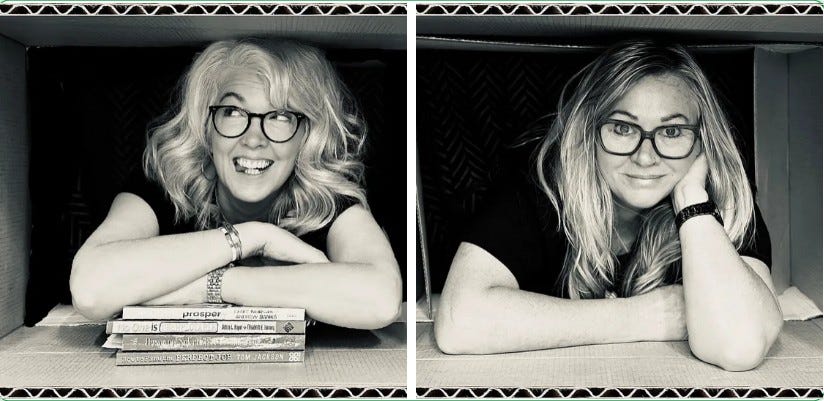
My Job, My Story
Most careers don’t start with a plan.
They start with a first job. A conversation. Someone taking a chance. Turning up early. Learning as you go.
One of the biggest challenges for young people choosing a path isn’t a lack of opportunity — it’s a lack of visibility. If you can’t see what jobs exist, or how people actually get into them, it’s hard to imagine yourself there.
That’s why we share these stories.
My Job, My Story highlights real people doing real work across our region — how they started, what they learned along the way, and what helped them move forward. Not polished career ladders. Just honest journeys.
Because sometimes the most useful career advice isn’t advice at all.
It’s hearing how someone else got there.
This weeks story is that of James McLennan, Workshop Manager at J & D McLennan
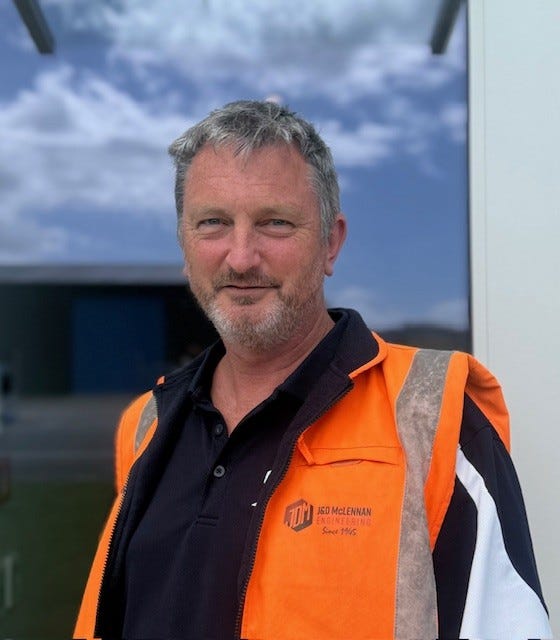
Started in 2004
How did you get to where you are today, what’s your story?
Well, the story of the company starts back in 45 with my granddad and his brother. They came back from the war and started an engineering business. They were doing crushing and general engineering, then moved into quarry work, crushing plants, conveyor systems, road compactors, all the sort of work happening at the time. Then there was a meeting in the early 70s between my grandfather and a fellow from America who built air bridges.”
There is a story that they met on a plane and were having a pipe and a whiskey together. I do not know if it is entirely true, but it is a good story. The two of them were chatting and the American said, “We are down here looking for someone to partner with and build airport bridges,” and my grandfather said, “We have a place we can use and we can build steel things.” The first job we got was to build a bridge in Auckland, and that was the kickoff of our partnership with an American company.
I would love to be able to tell you how many air bridges we have built. I think we are up to about 680 or something like that. We are getting up there. We have always been general engineers and enjoy finding work that is interesting and different. We helped Wellington Airport put the Eagles up on the roof and Golem.
In the early 80s when my grandfather passed away, my father and uncle took over the business. I had an interest in engineering and had been coming to the workshop on weekends after school, cleaning the floors and sorting out the nuts and bolts. It was dirty, it was noisy, and I loved it. What caught my eye most was the team in the workshop. You could design something and watch it go right through to the end of its life cycle and be installed. You could see something being dreamed up, turned into a technical drawing, made on the shop floor, installed, and then used by other people. Seeing that full journey was amazing.
After secondary school I went to CIT and completed a Certificate in Mechanical Engineering over two years. After that I moved to Canterbury to study Mechanical Engineering for another two years, in between playing rugby and drinking beer. It should have been longer, but I had had enough. I realised I did not want my role to be in an office. I wanted to be involved with what was happening in the workshop, from design right through to the product leaving.
I moved back to Wellington and started working at the family business, where I met my wife Julie. I then went to work for Industrial Mouldings down in Seaview. I helped set up their new plant and stayed with them for a year. Julie and I then moved to the UK for two years and did the obligatory OE.
When I returned, I started back with the family business, and when my uncle left I took over his role as Workshop Manager.
What does a typical day in your job look like?
I am predominantly at my computer, making sure the production manager has everything he needs and that all the supervisors are fully supported as well. I liaise between the designers, check that drawings are reviewed properly, and make sure anything going out the door has passed quality assurance. I also focus on the team on the ground, ensuring they are supported, looked after, and happy with the work they are doing.
How do you think your job is perceived by others, and is it different from the reality?
I think new employees probably see me as just a manager in the ofice. I used to be out on the floor much more, and I still make a point of getting out and talking with everyone whenever I can. I still know everyone’s name, which is important to me.
Do you have any daily rituals or habits that help you succeed at work?
Yes. Probably the biggest thing that has helped me is keeping a log of everything. I use an A4 journal, and if something has not been done, I copy it over to the next day. There is so much information coming through now that if you miss one thing, the knock on effect for the team further down the line can be significant. I would rather have everything sitting in front of me in the morning so I can look at it and think, I need to get that done today, and then start prioritising my list.
What’s the most rewarding part of your job?
Seeing something go out the door and knowing it is done right, seeing a project you can be proud of reach an international stage, like an airport, and then spotting it on TV or in the media, it is a great feeling to be able to say, “That’s done. We’ve done it.”
I also find it incredibly rewarding to see apprentices succeed and to be part of helping young people develop their careers. We try to make sure that if we take on an apprentice, it is not just to train them as a welder or a machinist. We give them as much exposure as possible across the workshop, because that is the kind of person I want to employ. Hopefully, after ten years of experience in mines or other industries, they come back and say, “I want to live in Upper Hutt and work for J & D McLennan.”
What’s the best piece of feedback you’ve ever received from a colleague or boss?
Write a list.
An engineer named John Atkins, who worked with my dad, used to write everything down perfectly. He would rule a margin across five pages, and that would be his record for the week. You would write what you wanted to do in one color, usually blue or black, and keep the margin for red to note any comments or updates. As soon as something was completed, you would mark it as done. It allowed you to see exactly what had happened throughout the day and week.
What advice would you give someone considering this trade or industry?
You have to be genuinely interested in engineering, and you need to be open to change because it is always evolving. You also have to want to get up in the morning and go to work, it needs to be something you are excited about.
Even though we are a steel workshop, there are so many opportunities here. You could work in mechanical engineering, business, CAD drafting, mechatronics, electronics, electrical, welding, CNC work fitting, or in roles like stores and administration. There is a wide range of paths to explore.
What do you think is the most important quality to succeed in your industry?
You have to be very open to working with other people, that is a big one. Staying at school and continuing on to university, if that is your goal, is also important, as it requires years of study and commitment.
What’s one skill you’ve developed that’s had the biggest impact on your career?
Being able to communicate effectively, both one on one and in front of a crowd, has had the biggest impact on my career.
What do you do to unwind after a busy week?
It’s important to completely switch off from work. Unwinding with a beer at the pub on a Friday is a good start, followed by watching local footy on the weekend. I also value family time, even though the kids are older now and are busy doing their own things.
If you could swap jobs with anyone for a day, who would it be?
I don’t know. I really enjoy what I do, and if I didn’t, as I said before, I wouldn’t be doing it. I can also see that we are still growing, which is exciting, and that makes me want to stick around and see what’s next for us.
Thank you to James for taking the time to chat with me. Beccy
Experience Rating (ER) Programme Changes
We’re giving you a heads-up on a couple of ACC changes that kick in from 1 April 2026.
They’re not dramatic, but they are important if you’re managing costs and cashflow across the year.
Here’s the short version.

If your business is part of the Experience Rating (ER) programme, an additional charge called the ER Programme Rate (currently 7.2%) will now be added to your Work Levy rate.
A few key points:
This charge is separate from any discount or loading applied to your account.
Previously, businesses outside the ER programme helped fund ER discounts.
From April, the ER programme will effectively fund itself.
In simple terms: if you’re in ER, your levy structure changes slightly — and you’ll see that reflected in your calculations.
Interest on Instalment Plans
From 1 April 2026, interest will apply to all new instalment plans, including any rolled-over plans.
Here’s what changes:
Interest will be calculated using a formula based on the floating first mortgage housing rate, plus a use-of-money adjustment.
That adjustment reflects ACC’s cost of not receiving full payment upfront.
Longer instalment plans will incur more interest.
The late payment instalment rate will also increase, moving away from the current flat 1% rate to a similar floating formula.
Translation: spreading payments will now cost more than it has in the past.
Where to check your rates
The 2026/27 levy rates are available via ACC’s levy calculator:
👉 https://www.levycalculators.acc.co.nz/wpc.jsp
When using the calculator, make sure you tick “Yes” for being part of the Experience Rating programme — that will incorporate the ER Programme Rate into your estimate.
Why this matters
Levy shifts and interest changes don’t always look big on paper — but across a year, they can have a noticeable impact on cashflow and forecasting.
It’s worth reviewing your setup now, especially if you’re:
Operating on tight margins
Running instalment plans
Managing higher-risk classifications
No surprises is always better than a nasty one.
We’re here to keep things straightforward — and keep you ahead of the curve.
Health and Safety reform is coming. Here is what actually changes.

There has been plenty of noise around the proposed Health and Safety reforms. So let us cut through it.
The duties do not disappear. The paperwork focus changes. And the spotlight moves firmly onto critical risk.
Here is what that means in real terms for employers.
1. Duty holders stay. The focus shifts.
Under the current Health and Safety at Work Act, PCBUs must eliminate or minimise risks so far as is reasonably practicable.
Under the reform, PCBUs will still have duties. But the key duty narrows to critical risks. These are risks that can cause death, serious injury, or occupational disease.
The practical shift is simple.
You still manage health and safety. You prioritise the risks that can actually kill or seriously harm someone.
Ask yourself:
• What hazards here could cause a fatality
• Which ones could lead to a notifiable serious injury
Those are the risks the law will expect you to control hardest.
2. Small businesses get simpler expectations
Small PCBUs with around fewer than 20 workers will have a more focused duty. Manage critical risks and basic welfare.
That means:
First aid
Drinking water
Toilets
Ventilation and lighting
Emergency response
Major risks such as working at height or vehicle movement
You will not be expected to document every minor hazard with the same intensity.
The takeaway is this.
You still actively manage serious hazards. You do not need to over document low impact issues just to prove compliance.
Severity matters more than the number of forms completed.
3. Approved Codes of Practice matter more
Approved Codes of Practice already exist. Under the reform, following them becomes stronger evidence that you have met your duty.
In practical terms, they become a legal shield.
If you follow the relevant code for construction, forestry, agriculture, or your industry, you can show that you did what the industry expects.
Treat them as your baseline standard, not optional guidance.
4. Safety systems still matter. Just smarter.
The reform pushes away from paper heavy systems designed to satisfy auditors.
Instead, the expectation is:
Focus on critical risk control
Align with other regulations
Be demonstrable without being bureaucratic
Your safety management system does not need to be bulky or impossible to maintain.
It does need to show:
You have identified severe risks
You have effective controls in place
You review those controls when things change
Good digital records, photos, and simple forms beat huge binders every time.
5. Officer duties remain. The proof changes.
Officers still need to be involved. They must understand the risks and make sure duties are met.
Under the reform, they will need to show they are:
Focusing on critical risks
Actively checking whether controls are working
Asking the right questions
If leadership cannot answer these three questions clearly, there is work to do:
Have we identified our biggest risks
Are our controls working
What evidence shows that
That is the real test.
6. Risk management moves toward outcomes
The emphasis shifts away from massive risk registers listing everything imaginable.
Instead the focus becomes:
What matters most
What you did to prevent serious harm
Whether it worked
It is better to have a live, evidence based assessment of serious risks than a thick register no one reads.
7. Enforcement will reflect this focus
WorkSafe will still enforce the law. But the tone changes.
Ignored critical risks will be treated harshly.
Minor paperwork failures will not be the main target.
You need to be able to answer clearly:
What controls are in place
How do you know they work
When did you last check
If you cannot demonstrate that, you do not have compliance. You have paperwork.
Bottom line. What to do now.
Step one. Review your risk profile. Identify what can kill or seriously injure someone.
Step two. Document targeted controls for those risks. Keep them simple and repeatable.
Step three. Use the relevant Approved Codes of Practice as your benchmark.
Step four. Get officers asking whether controls are effective, not whether forms are filled in.
Step five. Simplify your system. Quality beats volume every time.
Final word
This reform is not about making health and safety less important.
It is about making it more effective and more realistic.
If you approach it as a shift from paperwork to real risk control, you will be ahead of most of the market.
And that is exactly where you want to be.